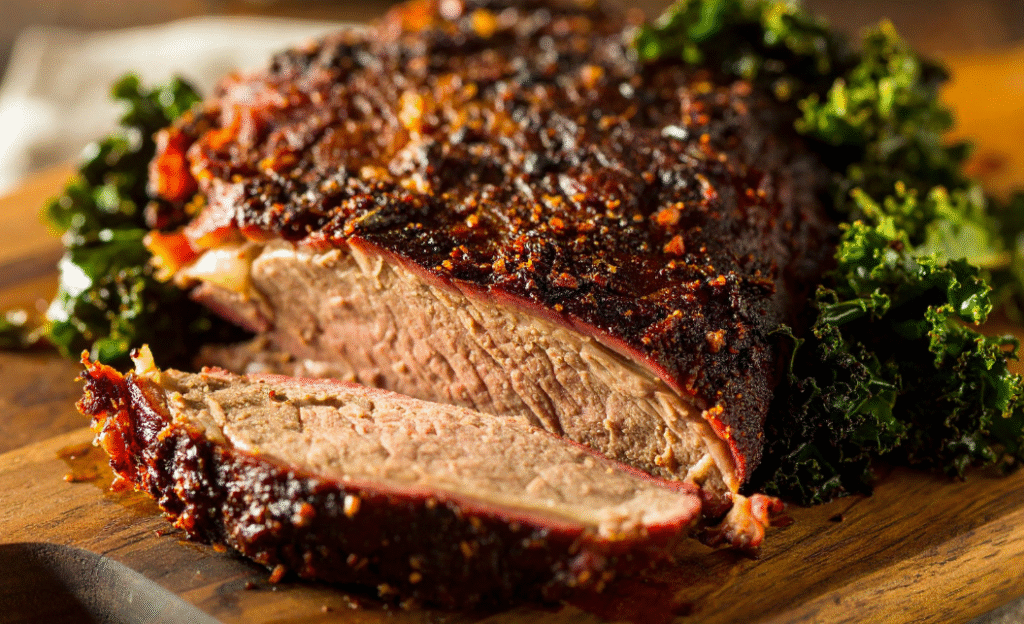


When looking up traditional barbecue recipes for a large, festive roast, you will inevitably run into the classic “shank vs. butt” debate. While the term “butt half” technically refers to the upper hind leg of a pig, in this article, we’re looking at the exact anatomical equivalents on premium ruminant animals: the Lower Shank versus the Upper Leg (the Beef Round or the Lamb Short Leg).
Both halves are fantastic purchases, especially if you’re serving a smaller group, since a whole hindquarter is likely too big for the occasion. They possess unique characteristics that dictate how they cook, slice, and taste.
That said, the decision will largely be based on your personal preferences for fat content and presentation. If you’re curious about the difference between the shank and the upper leg ends of a roast and want to know which one is best for your smoker, keep reading.
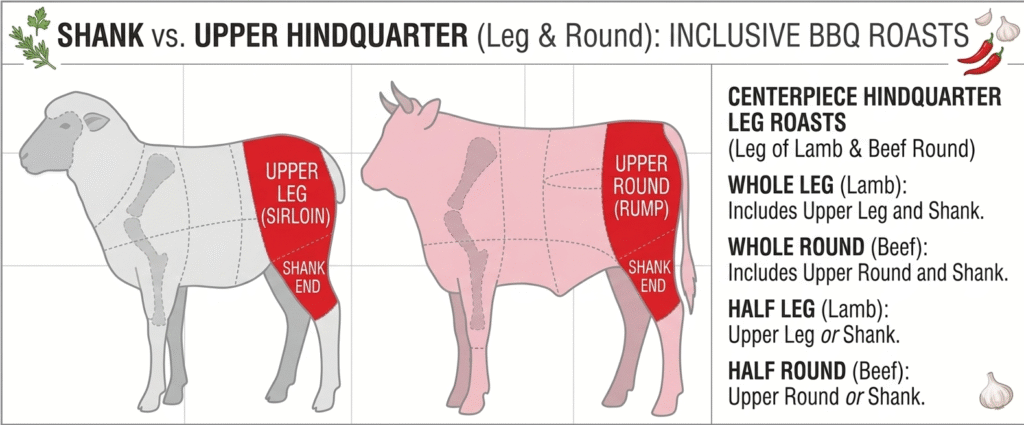
Before we can debate which portion is better for your barbecue, we first need to define the anatomy. A whole centerpiece roast incorporates the entire hind leg of a lamb or the round of a steer.
A whole leg is quite massive and often excessive for the average family’s needs. For this reason, butchers divide it into two easier-to-sell components: the shank portion and the upper leg portion.
Whether you choose to smoke these cuts fresh or cure them to replicate a traditional pink deli-meat flavor, understanding their structure is key to mastering the cook.
The shank is the lower remaining part of the animal’s back leg after the ankle (hock) is removed.
Appearance: It has a distinct, funnel-like shape.
Texture & Flavor: It contains more connective tissue, marrow, and fat. While the meat works a bit harder and is slightly tougher than the upper leg, it makes up for this by being incredibly rich and full of flavor.
Carving: It features a single, straight bone running down the middle, making it surprisingly easy to carve around.
The round end is derived from the upper part of the hind leg, near the hip.
Appearance: It tends to look more rounded and slightly smaller in length, but it is packed with meat.
Texture & Flavor: It has a much higher yield of lean, sliceable muscle.
Carving: Because it contains part of the pelvic/hip bone, carving can be slightly more problematic and requires navigating around curved bones.
| Feature | Shank End | Upper Leg (Round / Short Leg) |
| Anatomy | Lower Leg | Upper Leg / Hip |
| Meat Yield | Lower (more bone/fat) | Higher (more lean meat) |
| Fat Content | Higher | Lower (Leaner) |
| Carving Difficulty | Easy (straight bone) | Moderate (curved pelvic bone) |
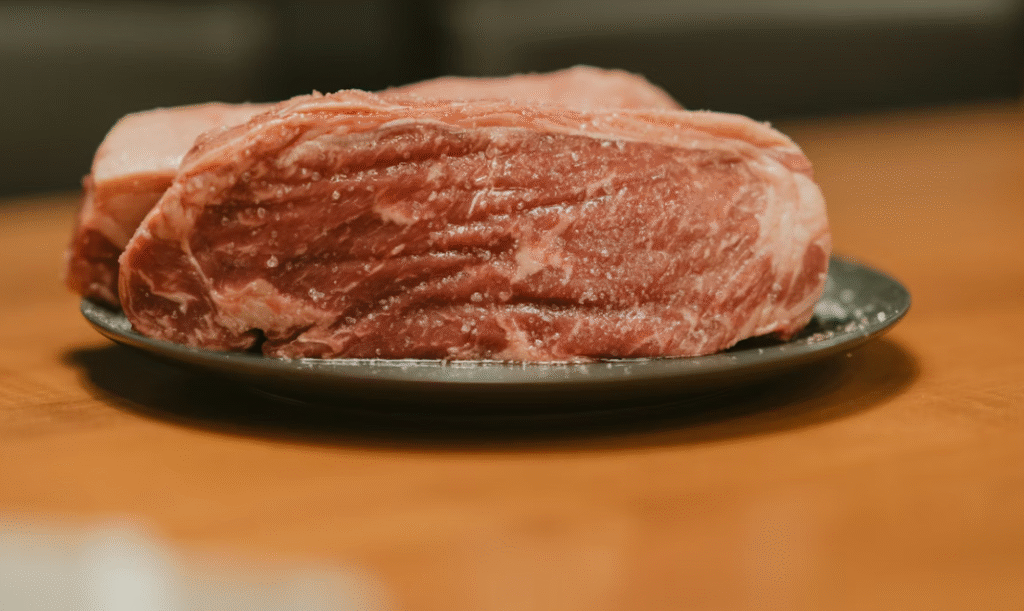
Despite being a phenomenal source of protein, large, rich BBQ roasts should be enjoyed mindfully. Health-wise, there is a distinct difference between the two portions. (As a general health guideline, the Dietary Guidelines for Americans note that lower consumption of red meat is associated with health benefits, and recommend prioritizing high-quality lean proteins).
Because the shank component contains more fat and rich connective tissue, a single serving will carry more calories. Alternatively, the upper leg portion is significantly leaner, making it the better option if you are counting calories or looking for a protein-dense, low-fat meal.
A Note on Sodium: If you are buying a pre-cured roast or choosing to wet-cure your beef/lamb at home to achieve that classic deli flavor, be mindful of sodium. The curing process leaves the meat with high salt content. (Note: If curing at home, don’t use volumetric measurements like teaspoons for pink curing salt (Prague Powder #1), it can be inaccurate. Instead, use a high-precision digital scale. For wet brines, you must calculate the active nitrites based on the combined weight of both the meat and the water to ensure you safely prevent harmful bacteria.)
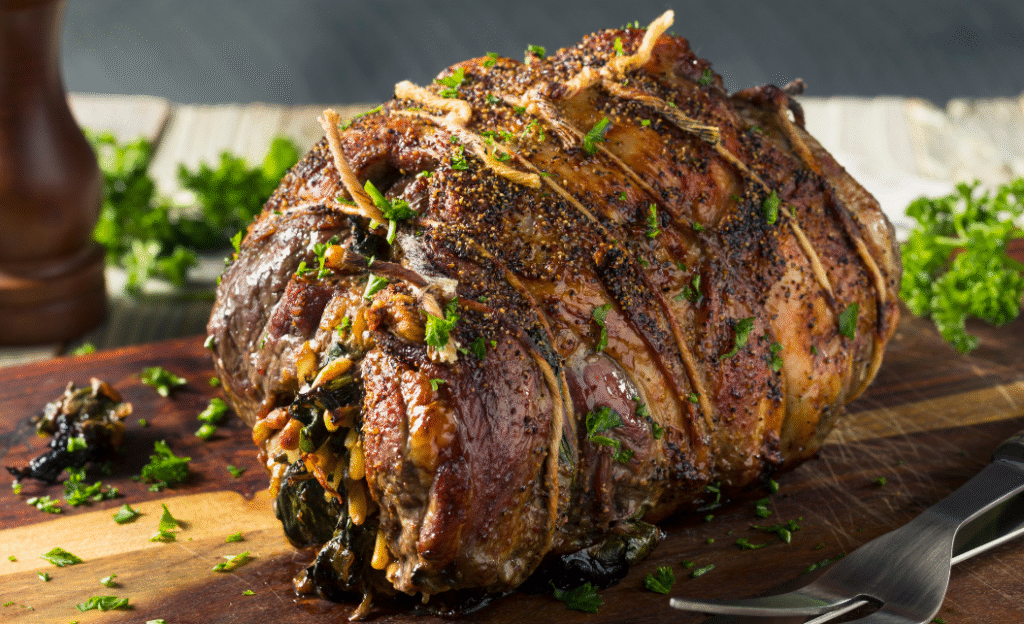
Knowing how much meat to buy ensures you won’t have a mountain of leftovers, nor will your guests go hungry. Because you are buying a bone-in cut, the general rule of thumb for purchasing is:
Boneless Roasts: 1/2 pound per adult.
Bone-in Roasts (Shank or Upper Leg): 1 pound per adult.
If you have kids at your gathering, be sure to account for that by slightly reducing their portion sizes in your calculations.
You may also encounter a cut called the front shoulder (like a Lamb Shoulder or Beef Chuck). You typically get it for a lower price compared to the hind leg. The primary difference is the muscle structure. The front shoulder is lined with intersecting muscles and dense fat, making it much harder to carve cleanly. However, shoulders are phenomenal if you want to push the internal temperature to 190°F+ for shredded, pulled BBQ.
Spiral slicing doesn’t refer to a specific animal or cut; it describes how the meat has been processed. A spiral-sliced roast is cut in a continuous spiral motion around the bone. This makes serving incredibly easy, as the slices simply fall away from the bone when you cut vertically. You can buy these pre-sliced and pre-cooked. Safety Warning: You should never make spiral cuts into a raw, fresh roast before putting it in a smoker. Cutting into raw meat exposes massive amounts of surface area, turning your lean roast into dry jerky, and actively pushes exterior surface bacteria deep into the otherwise sterile center of the meat.
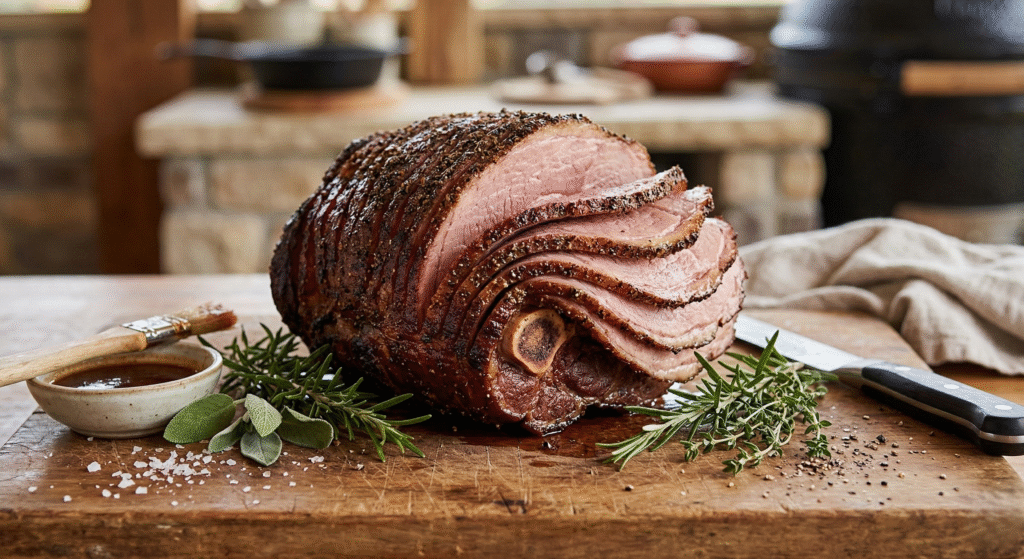
If you are buying a pre-smoked, fully cured deli roast from the store, it may be fully cooked and ready to eat cold. Always check the package.
However, if you are buying a fresh shank or round end from the butcher, you absolutely must cook it.
The Smoker Setup: Set your smoker strictly to 225°F–250°F.
The Wood: Always use fruitwoods like apple or cherry, as leaner beef and lamb absorb smoke rapidly and can easily be overpowered by harsh woods.
The Finish: For the Upper Leg (Round / Short Leg): Because this cut is lean, pull the roast at an internal temperature of 130°F–135°F for a juicy, medium-rare, sliceable texture.
Are there other types of cured beef or lamb?
You may come across many other types of specialty centerpiece roasts on the market. At their core, they are classified according to the cut, the cure, the age, and the level of cooking.
With regards to the level of cooking, some cured beef or lamb roasts are sold fully cooked, others are only partly done, and fresh cuts will need to be thrown into a smoker or cooked on a gas grill before you can serve them. Finally, regarding age, some specialty dry-cured options are aged to dramatically enhance their depth of flavor. Premium artisanal cuts can be dry-cured and aged for months or even years! Naturally, the longer they are aged, the more expensive they tend to be.
Do you need to cook your roast?
If you are buying a commercial, deli-style cured beef or lamb product, it typically won’t need any extra preparation. You can eat it right out of the package without having to cook it. However, there are exceptions, as we mentioned above. Consequently, before putting away your electric griddle or smoker, be absolutely sure to read the details on the package to ensure you have a fully cooked product.
Chef’s Note: If you purchased a fresh shank or round end from your local butcher, it is completely raw! You must smoke it (ideally with apple or cherry wood at 225°F–250°F). Remember to pull the lean round or lamb leg early at 130°F–135°F for medium-rare, and push the tough beef or lamb shank all the way to 200°F–205°F so it becomes tender.
This write-up should provide you with everything you need to settle the shank vs. upper leg debate. Whether you prefer the rich, easy-to-carve lower shank or the lean, meaty upper round, your next trip to the butcher should be significantly easier. Equip yourself with a quality meat thermometer, some cherry wood, and get ready to smoke an incredible centerpiece. For any other questions, drop a comment below, and we’ll get back to you!